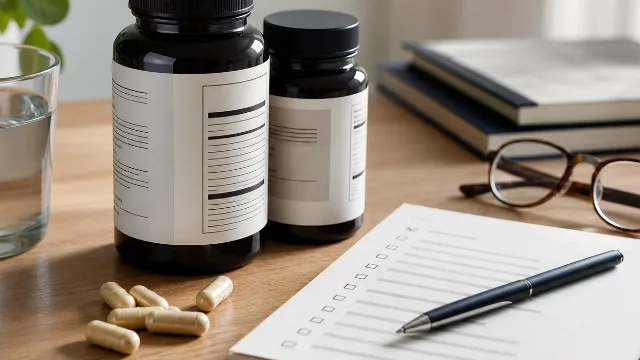
Calmer-focus buying guide
Best Focus Supplements for Jitters: How to Choose a Calmer Focus Product
Focus supplements can backfire when they add too much stimulation.
If caffeine helps you focus but also makes you feel wired, shaky, tense, restless, or sleep-disrupted, the answer is not always stronger. It is usually clearer: clearer caffeine amount, clearer stimulant sources, clearer label claims, and a better match between the product and your tolerance.
This guide is for people who want focus support with less jitter risk.
Discernwell is still finalising product recommendations. For now, this page explains the product categories, label checks, and comparison criteria we will use before any lower-jitter focus product earns a place here.

Product recommendations
Discernwell is still finalising lower-jitter focus supplement recommendations.
When product picks go live, this section will list the strongest options by use case, with links that jump straight to each product write-up.
Future product categories may include:
- Best lower-jitter caffeine option
- Best L-Theanine + Caffeine product
- Best simple L-Theanine supplement
- Best caffeine-free focus option
- Best focus supplement for caffeine-sensitive people
- Best label-transparent calmer-focus blend
For now, this guide explains the criteria we will use before any product earns a place here.
Start with why the product might be making you jittery
Jitters usually come from stimulation load.
That can mean too much caffeine, caffeine taken too late, caffeine stacked with other stimulants, caffeine hidden inside plant extracts, or a product that makes the label hard to understand.
A product may look like a focus supplement while quietly behaving more like a stimulant stack.
That is why the first question is not: which product is strongest?
The better question is: can I clearly see how much stimulation this product adds?
If the answer is no, it is probably not the best place to start.
Lower-caffeine focus products
A lower-caffeine product may suit people who still benefit from caffeine, but do not want a heavy stimulant load.
This category is not about removing caffeine completely. It is about making the caffeine dose easier to understand and easier to tolerate.
A lower-caffeine product may suit you if:
- Caffeine helps your focus, but high doses feel too sharp.
- Energy drinks feel like too much.
- Pre-workout-style focus formulas feel too aggressive.
- You want alertness without stacking multiple stimulant sources.
- You want a product where the caffeine amount is obvious.
When product picks go live, the main label checks will be:
- Total caffeine per serving.
- All caffeine sources disclosed clearly.
- No hidden guarana, yerba mate, kola nut, or vague energy blend.
- Sensible serving size.
- Warning language around caffeine sensitivity, sleep, blood pressure, and medication use.
- No exaggerated crash-free or limitless focus claims.
The best lower-caffeine products should make the stimulation load easy to judge within a few seconds of reading the label.
L-Theanine + Caffeine products
L-Theanine + Caffeine is one of the most relevant routes for people who like caffeine but dislike how it sometimes feels.
This category works best when both amounts are visible. A product that includes L-Theanine but hides the caffeine amount is still hard to compare.
An L-Theanine + Caffeine product may suit you if:
- Caffeine improves your focus but sometimes causes jitters.
- Coffee works, but you want a more consistent formula.
- You want a calmer-feeling caffeine route.
- You want a simpler alternative to heavy stimulant blends.
- You want to compare a two-ingredient route before broad focus formulas.
When product picks go live, the main label checks will be:
- Caffeine amount per serving.
- L-Theanine amount per serving.
- Ratio between caffeine and L-Theanine.
- Whether other stimulants are included.
- Whether caffeine sources are disclosed.
- Whether the warning label matches the stimulant load.
The cleaner products in this category should make the caffeine and L-Theanine amounts obvious.
Simple L-Theanine products
A simple L-Theanine product gives you more control than a pre-made stimulant formula.
This can be useful if you already get caffeine from coffee, tea, or another source and want to avoid adding more caffeine from a supplement.
A simple L-Theanine product may suit you if:
- You want to keep caffeine separate.
- You already know how much coffee or tea you drink.
- You want a calmer-focus product with fewer moving parts.
- You want to avoid stimulant-heavy blends.
- You want a product that is easy to compare by serving size and value.
When product picks go live, the main label checks will be:
- L-Theanine amount per serving.
- Caffeine-free status.
- Capsule, tablet, gummy, or powder form.
- Added ingredients.
- Serving count.
- Warning-label clarity.
- Price per useful serving.
The strongest simple L-Theanine products should be easy to understand and easy to fit around your existing caffeine intake.
Caffeine-free calmer-focus options
If caffeine itself is the problem, another caffeine product may not be the right answer.
Caffeine-free focus support can mean several different routes: creatine, Rhodiola, Citicoline, Lion's Mane, or other ingredients depending on the use case. The key point is that caffeine-free should be real, not just a marketing phrase.
A caffeine-free focus product may suit you if:
- Caffeine often makes you shaky, tense, or restless.
- Caffeine disrupts your sleep.
- You already get enough caffeine from coffee or tea.
- You want to compare focus support without adding more stimulation.
- You are sensitive to energy blends or pre-workout-style formulas.
When product picks go live, the main label checks will be:
- Caffeine-free status clearly stated.
- No hidden caffeine sources.
- No guarana, yerba mate, kola nut, or vague energy blend.
- Clear ingredient amounts.
- Realistic claims.
- Warning-label clarity.
The buyer rule is simple: if the page is for jitters, hidden stimulation is a serious weakness.
Rhodiola and fatigue-style focus
Sometimes the issue is not that you need more stimulation. It is that your focus problem feels like fatigue.
That is where Rhodiola may be worth comparing. It sits in the mental-fatigue route rather than the more caffeine route.
Rhodiola may suit you if:
- Your focus problem feels like tiredness or mental fatigue.
- Adding more caffeine does not feel like the right answer.
- You want to compare herbal fatigue-support options.
- You are looking for a lower-stimulation route for demanding periods.
When product picks go live, the main label checks will be:
- Rhodiola rosea species clarity.
- Extract standardisation.
- Rosavin and salidroside information if provided.
- Serving size.
- Whether it appears alone or inside a blend.
- Whether caffeine or other alertness ingredients are included.
Rhodiola should not be treated as a jitter fix. It is better understood as a route to compare when fatigue is the main focus problem.
What to check on a calmer-focus label
A calmer-focus product should make the stimulation question easy to answer.
Look for:
- Total caffeine per serving.
- All caffeine sources.
- L-Theanine amount if included.
- Stimulant herbs or energy-positioned ingredients.
- Whether the product uses a proprietary blend.
- Serving size.
- Warning information.
- Caffeine-sensitive use guidance.
- Sleep-related cautions.
- Claim quality.
- Price per useful serving.
The best products for this category are not necessarily the strongest. They are the ones that make the trade-offs clear.
Products that are harder to trust for jitters
Some products are a poor fit for jitter-sensitive shoppers because the label makes stimulation hard to judge.
Be cautious with products that use:
- Hidden caffeine amounts.
- Proprietary energy blends.
- Multiple stimulant-positioned ingredients.
- Vague clean energy claims.
- Aggressive no crash promises.
- Unclear serving sizes.
- Weak warning labels.
- Broad focus claims without clear ingredient logic.
This does not mean every blend is bad. It means blends need better disclosure. The more stimulation a product adds, the clearer the label needs to be.
How Discernwell will choose lower-jitter product picks later
When product recommendations go live, products should not earn a place because they look trendy or use strong marketing.
Each lower-jitter focus product will need to be judged by:
- Total caffeine amount.
- Caffeine-source transparency.
- L-Theanine pairing if relevant.
- Stimulant complexity.
- Ingredient clarity.
- Serving-size transparency.
- Warning-label visibility.
- Use-case fit.
- Price/value comparison.
- Claim quality.
A future product box should include:
- Who the product is best for.
- Why it fits the lower-jitter category.
- Caffeine amount.
- L-Theanine amount if included.
- What the label gets right.
- What to watch for.
- Affiliate disclosure if a link is used.
Until then, this page should help visitors understand what makes a focus supplement calmer, clearer, and easier to compare.
Safety before buying
Jitters are a signal worth taking seriously.
They can be connected to caffeine amount, timing, sensitivity, sleep disruption, anxiety, blood pressure, medication interactions, or stacking multiple stimulant sources.
Use extra care if you are pregnant or breastfeeding, taking medication, managing a medical condition, sensitive to caffeine, dealing with anxiety, sleep issues, heart rhythm concerns, blood pressure concerns, or planning surgery.
A sensible lower-jitter buying decision starts with three checks:
- How much caffeine is in this product?
- Are all stimulant sources clearly disclosed?
- Does the warning label match the stimulation load?
That filter will rule out many weak products before brand comparison starts.
Evidence and sources
This page is a product-selection scaffold, not a final product ranking.
Evidence details for the main ingredient routes are handled on the L-Theanine + Caffeine guide, caffeine guide, caffeine alternatives guide, Rhodiola guide, and label-reading guide. This page focuses on how lower-jitter focus products should be compared before product recommendations are added.
Product recommendations are not live yet. No product on this page has been ranked, reviewed, tested, priced, or linked with an affiliate offer. When product picks go live, they should be based on caffeine transparency, serving-size clarity, stimulant complexity, label quality, warning visibility, claim quality, and price/value comparison.
Editorial process
Discernwell is written by Craig A. and source-checked against published research, supplement labels, and safety guidance where available. We do not claim medical review unless a qualified reviewer is named on the page.
Read the Editorial Standards and Methodology for more detail.