Caffeine-free focus buying guide
Best Caffeine-Free Focus Supplements: How to Choose a Focus Product Without Caffeine
Caffeine-free focus supplements are for people who want support with focus, mental energy, calm focus, fatigue, or cognitive performance without adding another caffeine source.
That can mean very different things.
Some people want a calm-focus ingredient like L-Theanine. Some want a stronger caffeine-free performance-support route like creatine. Some are dealing with mental fatigue and want to compare Rhodiola. Others are looking at choline ingredients, functional mushrooms, or classic herbal mental-energy products.
The buying decision is not just which caffeine-free focus supplement is best? The better question is what kind of caffeine-free route actually fits your problem.
Discernwell is still finalising product recommendations. For now, this guide explains the product categories, label checks, and comparison criteria we will use before any caffeine-free focus product earns a place here.
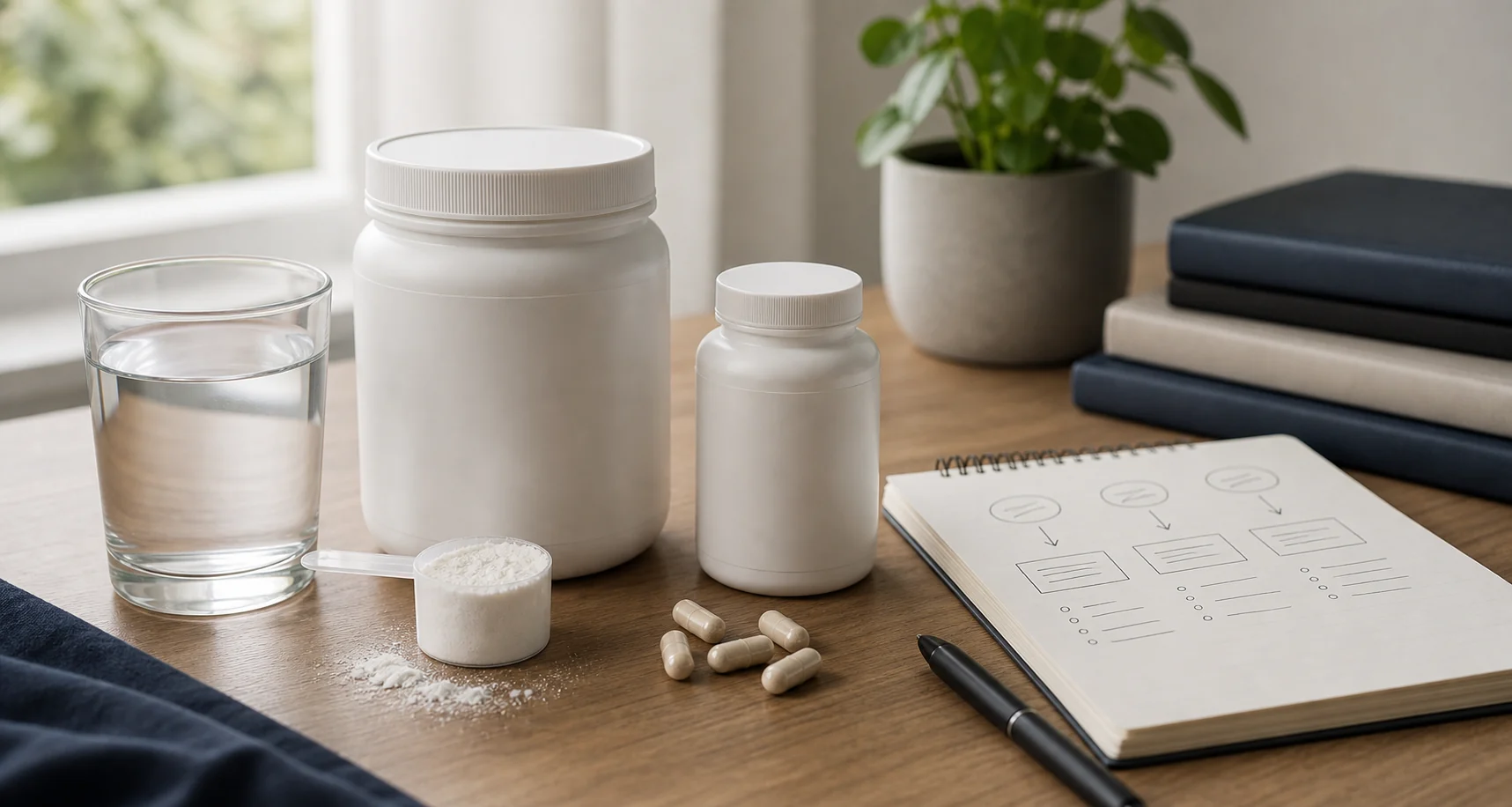
Product recommendations
Discernwell is still finalising caffeine-free focus supplement recommendations.
When product picks go live, this section will list the strongest options by use case, with links that jump straight to each product write-up.
Future product categories may include:
- Best caffeine-free focus supplement
- Best simple L-Theanine supplement
- Best creatine supplement for mental performance
- Best Rhodiola product for mental fatigue
- Best Citicoline product for memory and choline support
- Best Lion's Mane supplement
- Best caffeine-free focus blend with a transparent label
For now, this guide explains the criteria we will use before any product earns a place here.
Start with why you want caffeine-free focus support
Caffeine-free can mean different things.
For one person, it means avoiding jitters. For another, it means protecting sleep. For someone else, it means they already get enough caffeine from coffee and do not want a supplement adding more.
The first question is not: which product is strongest?
The better question is: what do I want this caffeine-free supplement to help with?
A product aimed at calm focus is different from a product aimed at mental fatigue. A creatine product is different from a mushroom product. A choline supplement is different from a broad focus blend.
That is why this page is organised by route, not by fake product rankings.
Simple L-Theanine products
Simple L-Theanine products are one of the easiest caffeine-free categories to understand.
They may suit people who want calm-focus support, more control over timing, or a product that can be used separately from coffee or tea.
A simple L-Theanine product may suit you if:
- You want a caffeine-free calm-focus option.
- You already use caffeine elsewhere.
- Caffeine sometimes feels too sharp.
- You want a simple ingredient with fewer moving parts.
- You want to avoid stimulant-heavy focus blends.
When product picks go live, the main label checks will be:
- L-Theanine amount per serving.
- Caffeine-free status.
- Capsule, tablet, gummy, or powder form.
- Added ingredients.
- Serving count.
- Warning-label clarity.
- Price per useful serving.
The best simple L-Theanine products should be easy to understand within a few seconds of reading the label.
Creatine products
Creatine is one of the strongest caffeine-free ingredients to understand because it has a broader performance-support story than most focus supplements.
It is usually associated with strength training, but it also has research interest around brain energy demands, cognitive workload, sleep loss, and mental performance under stress.
A creatine product may suit you if:
- You want a caffeine-free performance-support route.
- You prefer simple ingredients over long blends.
- You want a supplement that is easier to compare by serving size and value.
- You are interested in mental performance, not just alertness.
- You want to avoid caffeine-based focus products.
When product picks go live, the main label checks will be:
- Creatine monohydrate as the default comparison point.
- Clear serving size.
- Number of servings.
- No unnecessary blend complexity.
- Good value per serving.
- Realistic claims around performance and cognitive support.
Creatine is a good example of why caffeine-free pages should not only focus on calm. Some caffeine-free products are better understood as performance-support products.
Rhodiola products
Rhodiola is the route to compare when the main problem feels like mental fatigue.
It fits a different use case from L-Theanine or creatine. L-Theanine is more about calm-focus comparison. Creatine is more about performance-support comparison. Rhodiola is more relevant when the problem feels like tiredness, demanding periods, or fatigue-style focus issues.
A Rhodiola product may suit you if:
- Your focus problem feels like mental fatigue.
- Adding caffeine does not feel like the right answer.
- You want to compare herbal fatigue-support products.
- You are interested in adaptogen-style ingredients.
- You want a lower-stimulation route for demanding periods.
When product picks go live, the main label checks will be:
- Rhodiola rosea species clarity.
- Extract standardisation.
- Rosavin and salidroside information if provided.
- Serving size.
- Whether it appears alone or inside a blend.
- Whether caffeine or other alertness ingredients are included.
Rhodiola products need careful label comparison because extracts, serving sizes, and blend context can vary a lot.
Citicoline products
Citicoline is the caffeine-free choline-pathway route.
It is most relevant for people comparing memory-support ingredients, choline support, and broader cognitive-support formulas. It also helps visitors understand the difference between Citicoline, Alpha GPC, and broad brain-support blends.
A Citicoline product may suit you if:
- You are interested in memory-support ingredients.
- You want to understand choline before comparing products.
- You are comparing Citicoline with Alpha GPC.
- You want a cognitive-support route that is not built around caffeine timing.
- You want clearer label logic than broad brain blends.
When product picks go live, the main label checks will be:
- Citicoline or CDP-choline named clearly.
- Serving size.
- Whether it is single-ingredient or part of a blend.
- Whether other choline ingredients are included.
- Whether caffeine or alertness ingredients are also present.
- Whether claims stay realistic for the evidence.
Citicoline is especially useful to understand before buying broad cognitive-support blends, because choline ingredients can sound more complicated than they are.
Lion's Mane products
Lion's Mane is the functional mushroom route for caffeine-free cognitive-support interest.
It is not just a generic mushroom label to skim past. Product details matter: mushroom source, fruiting body vs mycelium, extract type, serving size, blend complexity, and label clarity can all change how easy a product is to compare.
A Lion's Mane product may suit you if:
- You are interested in functional mushrooms.
- You want a caffeine-free cognitive-support route.
- You want to compare mushroom products carefully.
- You care about performance-speed and stress-related focus angles.
- You want to understand fruiting body, mycelium, extract, powder, and blend labels.
When product picks go live, the main label checks will be:
- Hericium erinaceus named clearly.
- Fruiting body vs mycelium.
- Extract vs powder.
- Serving size.
- Whether it is single-ingredient or part of a mushroom blend.
- Whether claims stay realistic.
Lion's Mane is a good example of why caffeine-free does not automatically mean simple. Mushroom labels can be surprisingly hard to compare.
Ginseng products
Ginseng is the classic herbal mental-energy route.
It may fit people comparing caffeine-free herbal energy products, but it needs more label scrutiny than many shoppers expect. The type of ginseng, extract strength, ginsenoside content, serving size, and blend status all matter.
A ginseng product may suit you if:
- You are comparing herbal mental-energy ingredients.
- You are interested in fatigue support and demanding days.
- You want to compare traditional herbs before broad focus blends.
- You are looking at caffeine alternatives.
- You want to understand ginseng labels more clearly.
When product picks go live, the main label checks will be:
- Type of ginseng.
- Latin name.
- Extract vs root powder.
- Ginsenoside content.
- Serving size.
- Whether caffeine or other alertness ingredients are included.
- Warning-label clarity.
Ginseng belongs on a caffeine-free guide only when the product makes the label clear. A vague herbal energy blend is not enough.
Caffeine-free blends
Caffeine-free focus blends can be useful, but they need more scrutiny than simple single-ingredient products.
A blend may combine L-Theanine, creatine, Rhodiola, Citicoline, Lions Mane, ginseng, B vitamins, or other ingredients. That can be helpful if the formula has a clear purpose and transparent amounts. It can also become hard to judge if the product hides amounts inside a proprietary blend or makes broad claims without clear ingredient logic.
A caffeine-free blend may be worth comparing if:
- The label clearly says it is caffeine-free.
- There are no hidden caffeine sources.
- Key ingredient amounts are disclosed.
- The formula has a clear purpose.
- Warnings are easy to find.
- The claims match the ingredients.
- The blend is not just a long list of trendy ingredients.
When product picks go live, blends should be judged more strictly than simple products. The more ingredients a formula adds, the more explanation the label needs to provide.
What to check on a caffeine-free focus label
A caffeine-free focus product should make the basic questions easy to answer.
Look for:
- Caffeine-free status.
- Hidden caffeine sources.
- Exact ingredient names.
- Serving sizes.
- Whether the product is single-ingredient or a blend.
- Whether key amounts are hidden inside a proprietary blend.
- Warning information.
- Claim quality.
- Product category fit.
- Price per useful serving.
Hidden caffeine sources matter. A product can be marketed as a focus or energy supplement while using ingredients such as guarana, yerba mate, kola nut, tea extract, or vague energy blend language.
The best caffeine-free products should make the formula easy to understand without forcing you to decode the label.
Products that are harder to trust for caffeine-free focus
Some products are a poor fit for caffeine-free shoppers because the label makes the formula hard to judge.
Be cautious with products that use:
- Unclear caffeine-free claims.
- Hidden caffeine sources.
- Proprietary blends.
- Vague energy blend language.
- Multiple trendy ingredients with no clear purpose.
- Aggressive brain-booster claims.
- Unclear serving sizes.
- Weak warning labels.
- Poor explanation of why the ingredients are combined.
This does not mean every blend is bad. It means caffeine-free blends need better disclosure.
If a product is supposed to help you avoid caffeine, the label should make that easy to confirm.
How Discernwell will choose caffeine-free product picks later
When product recommendations go live, products should not earn a place because they look trendy or use strong marketing.
Each caffeine-free focus product will need to be judged by:
- Caffeine-free status.
- Hidden caffeine-source screening.
- Ingredient relevance.
- Serving-size transparency.
- Label clarity.
- Blend complexity.
- Warning-label visibility.
- Use-case fit.
- Price/value comparison.
- Claim quality.
A future product box should include:
- Who the product is best for.
- Why it fits the caffeine-free category.
- The key ingredient route.
- What the label gets right.
- What to watch for.
- Whether hidden caffeine sources were checked.
- Affiliate disclosure if a link is used.
Until then, this page should help visitors understand which caffeine-free route fits before choosing a product.
Safety before buying
Caffeine-free does not automatically mean risk-free or suitable for everyone.
A caffeine-free product can still include herbs, choline ingredients, mushroom extracts, adaptogens, sleep-adjacent ingredients, or other compounds that deserve a label check.
Use extra care if you are pregnant or breastfeeding, taking medication, managing a medical condition, sensitive to supplements, dealing with anxiety or sleep issues, managing blood pressure or blood-sugar concerns, or planning surgery.
A sensible caffeine-free buying decision starts with three checks:
- Is the product actually caffeine-free?
- Does the label clearly show the ingredient forms and serving sizes?
- Are the claims realistic for the ingredients?
That filter will rule out many weak products before brand comparison starts.
Evidence and sources
This page is a product-selection scaffold, not a final product ranking.
Evidence details for the main ingredient routes are handled on the individual ingredient guides, including L-Theanine + Caffeine, Creatine, Rhodiola, Citicoline, Lion's Mane, and Ginseng. This page focuses on how caffeine-free focus products should be compared before product recommendations are added.
Product recommendations are not live yet. No product on this page has been ranked, reviewed, tested, priced, or linked with an affiliate offer. When product picks go live, they should be based on caffeine-free verification, hidden-caffeine screening, label clarity, serving-size transparency, ingredient relevance, warning information, claim quality, and price/value comparison.
Editorial process
Discernwell is written by Craig A. and source-checked against published research, supplement labels, and safety guidance where available. We do not claim medical review unless a qualified reviewer is named on the page.
Read the Editorial Standards and Methodology for more detail.